
Catalogue
Certified materials
All the materials we use are approved for medical use and comply with European medical device regulations.
Natural polypropylene
Material information
Natural polypropylene is a thermoplastic polymer belonging to the polyolefin group. It stands out for its lightness, strength and ability to provide stability and biomechanical correction in foot orthoses.
Typical uses
Indicated for foot orthoses that require significant biomechanical correction or compensation. It is used, for example, in paediatric conditions that need greater control and correction, such as paediatric flat foot.
Technical properties
Maximum continuous-use temperature
100 °C
Qualities
Lightweight and washable
Slightly elastic
Provides stability and good biomechanical correction
Good tensile and tear resistance
High compression set
Impact resistance
Applications
Significant biomechanical correction or compensation
Paediatric conditions requiring greater control (paediatric flat foot)
Download technical manual
Carbon polypropylene
Material information
Carbon polypropylene shares the base composition of natural polypropylene and incorporates carbon particles. It stands out for its lightness, stability and greater elasticity, offering a good balance between biomechanical control and flexibility.
Typical uses
Indicated for foot orthoses that require significant biomechanical correction combined with elasticity. It is used, for example, with athletes who need the control provided by a plastic material together with good elastic capacity, to avoid excessive stress on the tissues.
Qualities
Lightweight
Greater elasticity than natural polypropylene
Radiolucent
Good stability and biomechanical correction
Impact- and tensile-resistant
Good balance of rigidity, abrasion resistance and chemical resistance
Applications
Significant biomechanical correction with elasticity
Athletes: plastic-level control with good elastic capacity
Download technical manual
E.V.A. – Ethylene vinyl acetate
Hardnesses 30, 40, 50 and 60 · Dual and triple hardness
Material information
E.V.A. is a closed-cell thermoplastic polymer made up of ethylene and vinyl acetate units. It stands out for its low weight and range of hardnesses, which allow its properties to be adapted to different uses and applications.
Available hardnesses
30, 40, 50 and 60, as well as dual- and triple-hardness combinations.
Typical uses
Its function varies depending on the hardness selected: higher hardnesses provide greater mechanical support, while lower ones offer a more cushioning function.
Qualities
Very lightweight and washable
Low water absorption
Easy to cut and glue
Non-toxic
Good stability
Medium biomechanical correction capacity
Applications
Higher hardness: greater mechanical support
Lower hardness: more cushioning function
Download technical manual
Polyurethane (PU)
Material information
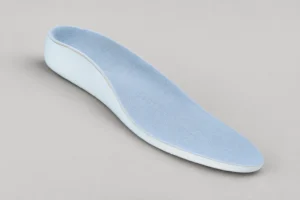
Polyurethane is a polymer whose formulation allows different properties to be obtained depending on the application. Open-cell polyurethane foam is used to manufacture these foot orthoses, standing out for its cushioning, adaptability and comfort.
Typical uses
Used in foot orthoses intended to help distribute plantar pressures and provide cushioning.
Because of its characteristics, it is used with diabetic foot patients and geriatric patients, according to the professional’s assessment. Its function prioritises cushioning and comfort, with a lesser corrective effect or mechanical support than other materials.
Qualities
Easy to adapt
Great impact absorption and cushioning capacity
Low compression set
High comfort
High energy absorption
Excellent sweat management
Washable
Resistance to bacterial and fungal growth
Lower biomechanical correction capacity than other materials
Applications
Distribution of plantar pressures
Cushioning
Diabetic foot
Geriatric patients
Download technical manual
E.V.A. for finishes and linings
Material information
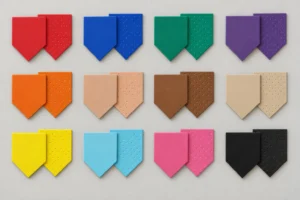
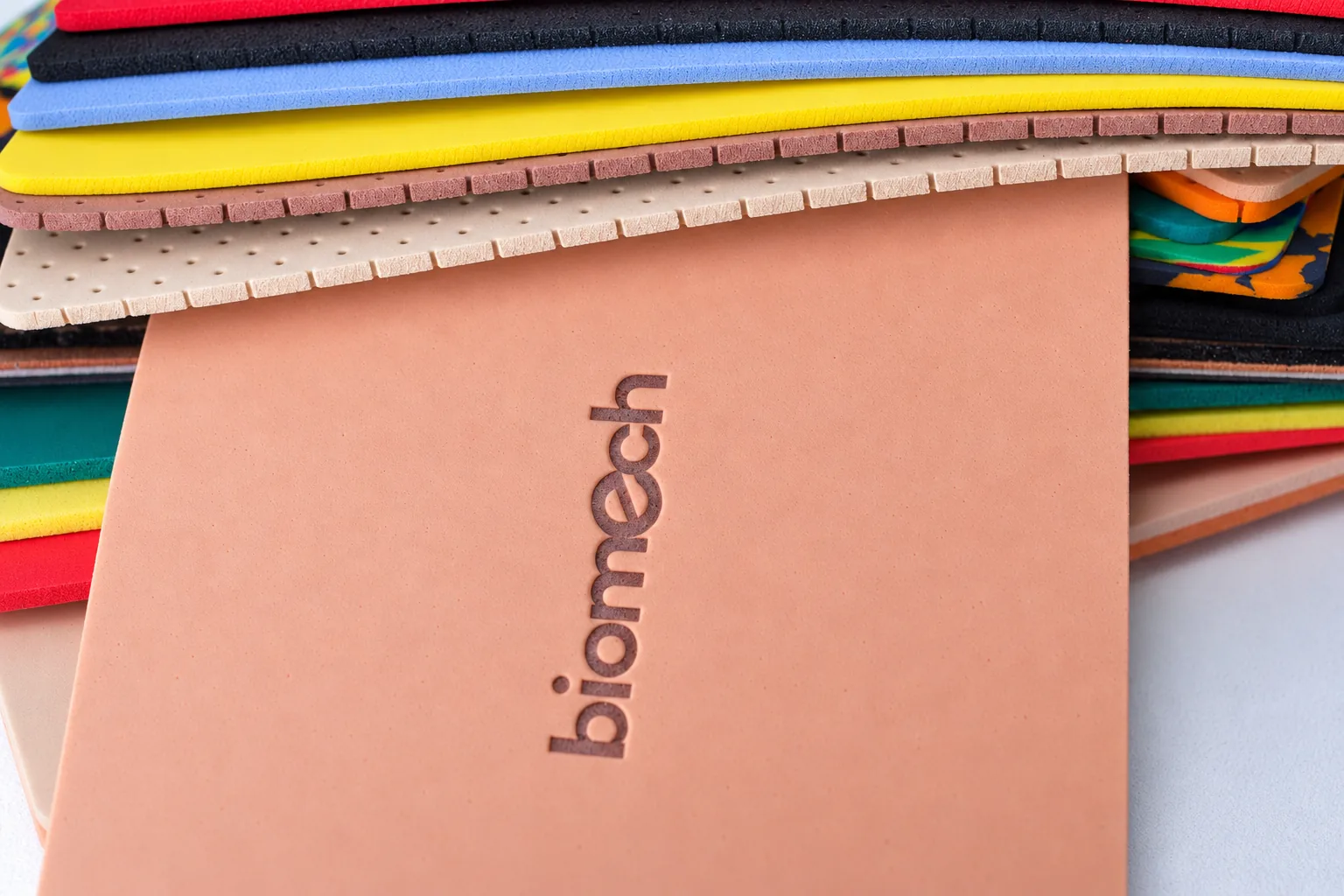
E.V.A. is used as the top and bottom covering of foot orthoses. It is available in a wide range of colours, thicknesses and grades, with smooth or micro-perforated finishes, to tailor the final cover of each insole.
Typical uses
Used as the final cover of foot orthoses. Greater thicknesses provide more comfort, while micro-perforated finishes promote breathability.
In polypropylene insoles, the E.V.A. bottom lining is used to provide extra firmness.
Qualities
Lightweight and elastic
Impact- and tensile-resistant
Good balance of rigidity, abrasion resistance and chemical resistance
Applications
Top and bottom final cover
Greater thickness: more comfort
Micro-perforated: promotes breathability
Bottom lining in polypropylene insoles
Colours
Finishes
Smooth
Micro-perforated
Various thicknesses
Various thicknesses
Download technical manual
Porón
Material information
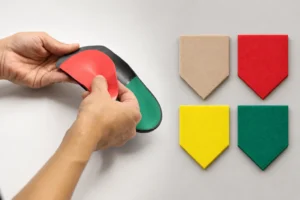
Porón is a polyurethane foam used in technical pieces and specific areas of foot orthoses. Depending on its hardness and resilience, it can deliver different mechanical responses, such as impact absorption, cushioning or a rebound effect.
Typical uses
Used to provide comfort, offloading and cushioning in specific areas of the insole, through additional pieces or as a top layer under another covering.
It must have a cover lining that prevents direct contact with the skin, as friction can generate heat.
Qualities
Easy to adapt
Great impact absorption and cushioning capacity
Low compression set
High comfort
High energy absorption
Excellent sweat management
Durable and washable
Resistance to bacterial and fungal growth
Applications
Comfort, offloading and cushioning in specific areas
Additional pieces or top layer under another covering
Always with a cover lining
Colours
Download technical manual
Plastazote
Material information
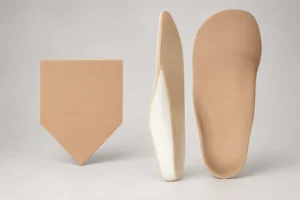
Plastazote is a high-purity cross-linked polyethylene thermoplastic foam, expanded using pressurised nitrogen. It is used as a top and intermediate covering material in foot orthoses.
Typical uses
Used in foot orthoses for people with diabetes, at-risk feet or deformities. It can also be incorporated into treatments for feet with ulcerations, according to the professional’s assessment and prescription.
Qualities
Lightweight and washable
Good tensile strength
Good tear resistance
Smooth salmon-coloured finish
Applications
People with diabetes
At-risk feet or feet with deformities
Feet with ulcerations (subject to professional assessment)
Colours
Finishes
smooth
2.5 mm
Download technical manual
On Steam
Material information
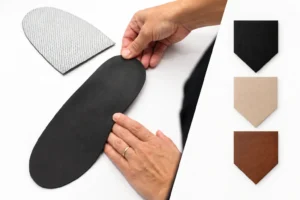
On Steam is a 100% microfibre material used as the top and intermediate lining in foot orthoses. It stands out for its pleasant feel, absorbency, breathability and odour control.
Typical uses
Used as a covering for foot orthoses, especially for people who do physical activity or have problems with sweating, thanks to its breathability and anti-odour properties.
Qualities
Absorbent and breathable
Anti-odour properties
Washable
Tear- and abrasion-resistant
Available in black, beige and leather
Applications
Covering for foot orthoses
Physical activity
Sweating problems
Colours
Finishes
smooth
1 mm
Download technical manual
On Suede
Material information
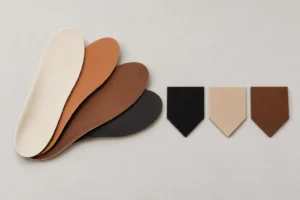
On Suede is a versatile, soft synthetic material with a velvety feel, used as the top and intermediate lining in foot orthoses.
Typical uses
Used as the top and intermediate covering of foot orthoses, giving a soft-touch finish.
Available colours
Black · Beige · Leather.
Qualities
Synthetic material
Soft, velvety texture
Versatile for different finishes
Applications
Top and intermediate covering
Colours
Finishes
smooth
1 mm
Download technical manual
Graphite
Material information
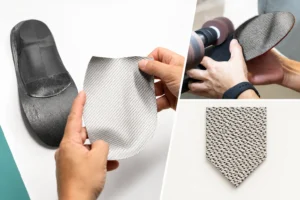
Graphite is a synthetic material used as the bottom lining of foot orthoses. It stands out for its non-slip properties, durability and carbon-like visual finish.
Typical uses
Used as the bottom covering of foot orthoses. Thanks to its non-slip properties, it is especially recommended for insoles intended for people who do physical activity.
Available colour
Silver.
Qualities
Non-slip
Carbon-like visual appearance
High-quality finish
High durability
Applications
Bottom covering
Insoles for physical activity (non-slip)
Colours
Finishes
smooth
1 mm
Download technical manual
Technical materials manual
Find the data sheets, properties and applications of all our materials in a single document.